February is bringing about a ton of stories about eco-friendly home design. Natural Home magazine announced that they are building the first ever "green home" in NYC (converting a 90-year-old brownstone in Brooklyn--my late grandmother, who grew up in Brooklyn, would be amused), the Inquirer lead their Home & Design coverage with a story on putting sod on one's roof, while the New York Times is advocating dirt flooring. Did I mention that House and Garden magazine dedicated their February issue to eco-design?
The surge of coverage both highlights the obvious appeal of eco-friendly design (efficient energy bills, decent design quality and general good karma), but doesn't tend to be forthright about the downfalls (products can be prohibatively expensive, time consuming and, in the case of dirt flooring, requires a bit of education before a homeowner is okay with the idea).
Yes, we want to reduce the environmental impacts of our lifestyle without sacrificing style, but generally the costs scare us off. BusinessWeek summed this up nicely. If faced with deciding to purchase a snazzy new granite countertop versus a very efficient furnace, most of us will pick the countertop.
Eco-friendly MIO Culture, based here in Philadelphia, has a bunch of home decor stuff that is a more realistic alternative to sodding up the roofs and floors. As said before, I'm primarily a big fan of their 3-D wallpaper, specifically for long-ignored entry hallways. But the company earns points for their design consideration, but also for addressing affordability.
Showing posts with label Practical. Show all posts
Showing posts with label Practical. Show all posts
Thursday, February 08, 2007
Wednesday, January 17, 2007
Starting Out: How to Furnish Your Home, Cheaply and Stylishly
I'm always hesitant to pick up any of the effusive books/magazine articles that promise to let you in on the secrets to decorating your home cheaply and stylishly. Why? Because the tips are usually ridiculous--written by the sort of person who finds bliss in suggesting $300 towels, are far craftier than the general population (Make a lamp out of an old vodka bottle!) or are putting cheapness at a higher priority over quality.
It IS possible to furnish your home on a slight budget without sacrificing quality, style or even comfort. I know because I've managed to do it over the course of a year and a half, right down to the collection of 14 platinum-edged porcelain dinner plates ($3.50-$7.99 a piece) that I bought last week.
So get your piggy banks, here are the secrets to charm on the cheap, even if you're just starting out in your own hovel of an apartment:
1. Develop an eye for quality and style. Browse the high-end magazines for furniture ads or general setting photos. You're not doing this to follow trends, you're just honing your ability to spot high quality and expensive-looking styles. If you study, you'll be able to go to most secondhand stores (read: not vintage, not overpriced nonsense) and come out with something that looks antique. Or will at least know how to re-work a questionable item so it does look special.
2. Start saving--you'll need about $1,500-2,000 at most for this step. Winter (specifically January) and Summer (usually August) are the best times to buy high-ticket furniture for insane discounts. Really. I just bought a $3800 hand-carved table for an insane price. I have bought dresses for more than this table. Waiting for clearance sales=great payoffs.
3. Paint your rooms, if needed. As much as I hate saying this, do a neutral color. I know, I have coral pink walls, but if you're just starting out, it's hard enough buying furniture without having to worry about it matching a silver-and-watermelon-pink wallcovering. Pale buttercream, grey with the slightest twinge of pink, and regular cream are always flattering. Extend the paint on to the ceiling if you can for a more-finished look.
4.. Where to invest. Learn to live with the couch (or upholstered chairs) and dining room table you presently have. These two furniture pieces make a HUGE difference on your overall decor, you have no idea. Even if you fill your home with priceless curiousities, a cheap futon will ruin everything. Same goes for cheap tables with thick layers of plastic-looking veneer. Invest modestly in these two pieces. You will always use a couch and a nice big table. You can even use the table as desk, if you're pressed for space.
If you own a very tiny space--meaning no possible room for a dining room table--replace your counters and/or cabinetry. Huge difference.
In the meantime, get rid of your cheapest-looking, dreary stuff. If it can't be painted to look better, give it away.
5. Almost always, buy these items on sale at high-end places: Plates, drinking glasses and goblets, blankets/bedding, end/accent tables, decorate storage, pillows, drapes, rugs and tablecloths. Buy more plates and glasses than you think you need.
5.a. Usually buy solids, unless you see a pattern you adore. Make sure the curtains you buy aren't see through.
6. Almost always, buy these things second-hand, looking for the highest quality possible: Coffee tables, chairs, bureaus, headboards, mirrors, tall cabinets (instead of bookshelves or wall-mounted cabinets). Look for classic lines, good detailing and convincingly good construction. Don't worry about color or hardware--these can be replaced.
6.a. Don't buy anything with a cheap veneer. You know those cute chain stores that specialize in quasi-contemporary furnishings? Good for accessories, not for furnishings. In the catalogues, the stuff looks adorable, in person, terribly cheap. Save yourself the trouble.
7. Chandeliers and lamps can be bought anywhere, even chain stores. Remember that people will notice them, and that you can also paint these (albeit carefully). Don't buy torchiere lamps.
These are the general rules for starting out in style, while not spending too much. If you always buy high-quality in a neutral pattern, you won't have to worry about mixing and matching. You'll look charming, not adrift.
It IS possible to furnish your home on a slight budget without sacrificing quality, style or even comfort. I know because I've managed to do it over the course of a year and a half, right down to the collection of 14 platinum-edged porcelain dinner plates ($3.50-$7.99 a piece) that I bought last week.
So get your piggy banks, here are the secrets to charm on the cheap, even if you're just starting out in your own hovel of an apartment:
1. Develop an eye for quality and style. Browse the high-end magazines for furniture ads or general setting photos. You're not doing this to follow trends, you're just honing your ability to spot high quality and expensive-looking styles. If you study, you'll be able to go to most secondhand stores (read: not vintage, not overpriced nonsense) and come out with something that looks antique. Or will at least know how to re-work a questionable item so it does look special.
2. Start saving--you'll need about $1,500-2,000 at most for this step. Winter (specifically January) and Summer (usually August) are the best times to buy high-ticket furniture for insane discounts. Really. I just bought a $3800 hand-carved table for an insane price. I have bought dresses for more than this table. Waiting for clearance sales=great payoffs.
3. Paint your rooms, if needed. As much as I hate saying this, do a neutral color. I know, I have coral pink walls, but if you're just starting out, it's hard enough buying furniture without having to worry about it matching a silver-and-watermelon-pink wallcovering. Pale buttercream, grey with the slightest twinge of pink, and regular cream are always flattering. Extend the paint on to the ceiling if you can for a more-finished look.
4.. Where to invest. Learn to live with the couch (or upholstered chairs) and dining room table you presently have. These two furniture pieces make a HUGE difference on your overall decor, you have no idea. Even if you fill your home with priceless curiousities, a cheap futon will ruin everything. Same goes for cheap tables with thick layers of plastic-looking veneer. Invest modestly in these two pieces. You will always use a couch and a nice big table. You can even use the table as desk, if you're pressed for space.
If you own a very tiny space--meaning no possible room for a dining room table--replace your counters and/or cabinetry. Huge difference.
In the meantime, get rid of your cheapest-looking, dreary stuff. If it can't be painted to look better, give it away.
5. Almost always, buy these items on sale at high-end places: Plates, drinking glasses and goblets, blankets/bedding, end/accent tables, decorate storage, pillows, drapes, rugs and tablecloths. Buy more plates and glasses than you think you need.
5.a. Usually buy solids, unless you see a pattern you adore. Make sure the curtains you buy aren't see through.
6. Almost always, buy these things second-hand, looking for the highest quality possible: Coffee tables, chairs, bureaus, headboards, mirrors, tall cabinets (instead of bookshelves or wall-mounted cabinets). Look for classic lines, good detailing and convincingly good construction. Don't worry about color or hardware--these can be replaced.
6.a. Don't buy anything with a cheap veneer. You know those cute chain stores that specialize in quasi-contemporary furnishings? Good for accessories, not for furnishings. In the catalogues, the stuff looks adorable, in person, terribly cheap. Save yourself the trouble.
7. Chandeliers and lamps can be bought anywhere, even chain stores. Remember that people will notice them, and that you can also paint these (albeit carefully). Don't buy torchiere lamps.
These are the general rules for starting out in style, while not spending too much. If you always buy high-quality in a neutral pattern, you won't have to worry about mixing and matching. You'll look charming, not adrift.

Wednesday, December 13, 2006
But at least I could shop
My apologies about being AWOL for about two weeks. I will spare you the details, but I came down with a severe bronchial infection. It was decidedly not glamorous.
However, there is one good thing about all that bed rest, besides watching a weekend of That Girl...online shopping. I'm one of millions who puts off shopping until the last available moment, which turns out to work in my favor, since retailers start marking things down. Not that I'm cheap, mind you, just exuberant. I like buying lots at a t ime, in multiples.
However, there is one good thing about all that bed rest, besides watching a weekend of That Girl...online shopping. I'm one of millions who puts off shopping until the last available moment, which turns out to work in my favor, since retailers start marking things down. Not that I'm cheap, mind you, just exuberant. I like buying lots at a t
 ime, in multiples.
 As usual, anthropologie has the best home stuff on sale. Here are a few things that I liked:
- Glass Candlesticks (left), about $8/piece. Glass candlesticks are pretty fantastic, because they give you a nice stately tablescape without entirely blocking everyone's view. The light reflects on the glass, which is a pretty effect.
- Lion Workshop Toy, $10. I'm a big advocate of using children's home accessories as legitimate decor. Buy two, use them as accent pillows--works particularly well on "modern" style sofas.
- Fleur de sel lamp, $60 This lamp sort of reminds me of the fantastic Bodo Sperlein collection for Spanish ceramics maker Lladro. The texture is magnificent. Because it's all in white, the overall texture, not necessarily the rosettes, that is noticed. So I wouldn't worry about this being too frou-frou.
Thursday, November 02, 2006
No, It's Not an Upholstered Coffin
 This is actually an upholstered leather bench, available through Scarlett Alley (241 Race St.). The top opens up, allowing you to store all sorts of goodies and messes. When closed, it can provide extra seating while looking unassuming. I certainly wouldn't think this stylish little number was actually full of incidentals.
I also like the tailored, confirmed-bachelor-esque qualities inherent in this piece. It's the same feeling you get from a Chesterfield sofa--you're ten times more interesting when you sit on one, and also ten times more likely to drink out of a conspicuous silver flask.
Photo from ScarlettAlley.com
Monday, October 23, 2006
Coral or Tree, You Decide
 I haven't decided if these charming coat hangers from Usona (113 S. 16th) resemble a coral branch or a merely a denuded tree. The website says coral, but I see one of the many bare trees outside of my window right now. Perhaps certain people--and I'm using "people" the way one uses the royal "we"--can't accept the seasonably cold weather and can't escape the reminders that soon, one will need a parka and goggles to face the day.
But coral or tree, these Corallo coat hangers are a fantastic alternative to having to throw said parka on a lonely chair. I dare say that having a proper coat hanger will encourage civility in your home. I lean towards the coral-stained color, but I do think that the natural toned one would look well amongst swedish modern neutrals. The angles would break up the rectilinear forms nicely.
Photo from usonahome.com
Saturday, September 16, 2006
Dining Room Tables Are Very Good Investments
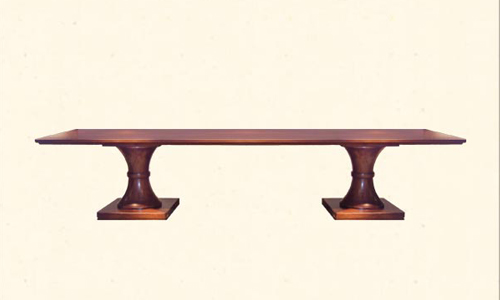 I've spent a few days trying to find an acceptable desk that has enough surface area for projects, but isn't a dreary eyesore that depresses you to the point of inactivity. Today's desk offerings tend to look as alien to the home as a cubicle or giant Xerox machine would.
I think I've said this before in the not-so-distant-past, but I fully believe and encourage everyone to eschew desks in favor of dining room tables. Yes, even if you have a microscopic apartment (you will come off as imaginative and charming when you throw all the rules regarding furniture scale out the window, by the way).
Here is the logic: Barely acceptable desks tend to cost just as much, and are not nearly as useful as a dining room table. A dining room table can accomodate all sorts of projects, tend to be better constructed and serve as a natural gathering point for your guests. And having a dining room table makes you feel like an interesting specimen that entertains constantly. You also have a place to hang a chandelier, which is always a bonus.
The above dining room table/desk is the Newport Dining Table from Usona Home (113 S. 16th). Made of solid walnut with two pedestal bases, the table is both classic and a bit off-beat. I don't have any particularly imaginative ideas regarding seating, but I do like the idea of this sort of bench seating and their complementary chair counterparts.
(photo from usonahome.com)
Thursday, August 31, 2006
The #1 Decorating Solution For Renters and Other Transients
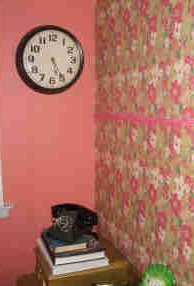
I have a small spot in my heart for renters. It’s not as big as the spot for Schnapps bears, but one look at that link and it’s obvious why. But I really do sympathize with the plights of renters these days.
First of all, they have to constantly fear that a developer will come in to their building, then convert it in to $500,000+ condos, forcing them in to a seedier part of town. Until the forces of gentrification invade that neighborhood, and so on, until those who can’t afford to buy will be relegated to the Delaware River.
But some renters also have to put up with landlords who won’t allow one speck of color on the walls, producing depressing off-white rooms that marginalize your existence even further. One minute, you feel like a sassy grown-up, the next, you’re looking at the lone pathetic art reproduction poster illuminated by a torchier lamp and wondering what went wrong.
So I was excited when I saw the wall clings, discussed in the previous entry. But once I saw the gentrification-like price of those scraps of vinyl, I got angry. And while I may not be able to fight market forces, I can offer you a solution for your bare walls.
Look at the above left photo (of my office, as indicated by the coffee table books and rotary phone). You’re thinking “Well that sure is a busy wallpaper pattern. Did she steal that from the set of the Mary Tyler Moore show?”
But you're wrong. It's not wallpaper; it's $12 worth of fabric from the local crafts store, with a short length of pom-pom fringe. Underneath all of that color, is roughly 3-4 rolls of double-stick heavy-duty wall mounting tape. Put these items together, rope off about 3 hours of your evening, and your wall can also be enhanced by a little no-damage very cheap faux upholstery. (exhale)
I recommend applying the tape in three foot squares. Place the short end of the fabric length on the horizontal axis of the wall, pressing hard to make sure you get it nice and stuck to the tape. Proceed across the wall. Cover up any unsightly seams with fringe, or ribbon (this is why I advocate working horizontally). Try to use a fabric with a slight stretch to it- here I used a sort of lightweight flannel. The whole project set me back maybe $30. That price won't even get you a packet of wall clings.
NOTE: Obviously...applying zingy fabrics to the wall makes your entire room 10 times more flammable. Be careful with your novelty candles.
Dorm Residents: This is the perfect way to tone down the industrial, soviet bloc-style room you live in. It's also easily removable with a strong tug, in case the pesky RA enters.
Thursday, August 24, 2006
Make Your Furniture Work Harder, Even When You're Not

Behold the official Leisure Table. Okay, that is not its real name. This is actually the Usame side table by Kartell from minima (118 N. 3rd).
I call it the Leisure Table because it would be perfect for coffee-and-magazine time, which officially occurs between 7 and 10 p.m. just in case you didn't know. Adjust your schedule accordingly.
Meant to be used as a side table, bed tray or accent piece, Usame resists stains while adding much needed color or subtle femininity (Art Deco inspired flowers are etched in to its surface). Magazines fit in to a cut out compartment, and coffee...well that can go anywhere. No coasters necessary.
Thursday, August 10, 2006
The prescription for a depressing bathroom...
Okay, so you suspect you have a depressing bathroom. I use the term 'suspect' because one can never be too sure of the outlook of an inanimate object. But you just may be depressing yourself and unsuspecting guests, with a regrettable bathroom.
Decor-wise, bathrooms tend to be ignored, even though they're the most visited room in your house when you entertain. In other rooms, you work extra hard to create an inviting environment where people will happily forget where they are. A bathroom, on the other hand, is a constant, usually jarring, jolt back to reality.
In most cases, bathroom depression can be so severe that displaying baskets of even the nicest soaps from Town Home won't be enough to overcome the problem. But you can:
Fix the Lighting: Flourescent lighting is the sartorial equivalent to assaulting your guests. When one gazes at their reflection while under the greenish-hued glow, the party is over for them. You can completely undermine one's confidence with a single flip of the switch. If you own your home, invest in recessed lighting, taking care not to install canisters directly over one's head (such as the center standing area over the sink). Renters (or the installation-phobic) can use indirect sconce lighting for a similarly flattering effect.
Paint the Walls: While a good, bold color can capture my heart, bathrooms really do look better with a low-key color. The most flattering bathroom color I've seen is a buttercream yellow hue- the golden tones enhance skintone while brightening the room.
Invest in a Better Bathtub: And perhaps a sink. But the bathtub tends to be the pivotal piece in a bathroom. You will endlessly impress others with a well-chosen bathtub, since most are, at best, very dreary utilitarian pieces. And you know what you can do with a lovely looking bathtub (like the Savoy from Waterworks)? Fill it with ice and create a mini-bar. It's a batty idea, but doesn't it seem fun? You wouldn't want to do that with most vinyl/chipped ceramic bathtubs.
But if it's not in your budget, a thorough cleaning, a new shower curtain and new hardware can do a world of good.
The big decor retailers in the city- west elm, Williams-Sonoma, Macy's, Ikea- are a good start for bathroom accessories, though the more serious should head directly to Waterworks (1525 Walnut). Their business focuses on bathrooms, so you'll find a good selection of tubs, sinks and hardware.
Okay, so you suspect you have a depressing bathroom. I use the term 'suspect' because one can never be too sure of the outlook of an inanimate object. But you just may be depressing yourself and unsuspecting guests, with a regrettable bathroom.
Decor-wise, bathrooms tend to be ignored, even though they're the most visited room in your house when you entertain. In other rooms, you work extra hard to create an inviting environment where people will happily forget where they are. A bathroom, on the other hand, is a constant, usually jarring, jolt back to reality.
In most cases, bathroom depression can be so severe that displaying baskets of even the nicest soaps from Town Home won't be enough to overcome the problem. But you can:
Fix the Lighting: Flourescent lighting is the sartorial equivalent to assaulting your guests. When one gazes at their reflection while under the greenish-hued glow, the party is over for them. You can completely undermine one's confidence with a single flip of the switch. If you own your home, invest in recessed lighting, taking care not to install canisters directly over one's head (such as the center standing area over the sink). Renters (or the installation-phobic) can use indirect sconce lighting for a similarly flattering effect.
Paint the Walls: While a good, bold color can capture my heart, bathrooms really do look better with a low-key color. The most flattering bathroom color I've seen is a buttercream yellow hue- the golden tones enhance skintone while brightening the room.
Invest in a Better Bathtub: And perhaps a sink. But the bathtub tends to be the pivotal piece in a bathroom. You will endlessly impress others with a well-chosen bathtub, since most are, at best, very dreary utilitarian pieces. And you know what you can do with a lovely looking bathtub (like the Savoy from Waterworks)? Fill it with ice and create a mini-bar. It's a batty idea, but doesn't it seem fun? You wouldn't want to do that with most vinyl/chipped ceramic bathtubs.
But if it's not in your budget, a thorough cleaning, a new shower curtain and new hardware can do a world of good.
The big decor retailers in the city- west elm, Williams-Sonoma, Macy's, Ikea- are a good start for bathroom accessories, though the more serious should head directly to Waterworks (1525 Walnut). Their business focuses on bathrooms, so you'll find a good selection of tubs, sinks and hardware.
Monday, May 22, 2006
Keeping Your Backyard Safe From Stiltwalkers...
Did you know that the most common garden pest this year isn't the mosquito, but the ladies (myself included) who can't leave the house without their high heels? It's true. As the heat pushes us out of our apartments and in to our outdoor spaces- however microscopic they are- for entertaining, chances are that you'll have at least two guests who are slowly sinking in to the lawn.
Those with patios aren't really safe either- a short while ago, I got a heel stuck in between both a boardwalk-like walkway and in the mossy stuff in between bricks on a sidewalk. Since most of us stiltwalkers aren't ready to give up our heels, you can keep your garden, and your guests safe by using an outdoor rug.
Why an outdoor rug? An outdoor rug, such as this rainbow Plynyl Shag from Foster's Urban Homeware (124 N. 3rd) is usually made from weather-safe materials that'll keep mold and mildew away, while acting as a protective barrier between high heels and lawsuits. You can leave it outside for weeks on end and the only thing you'll have to worry about is a sudden wind blowing it away, Aladdin-like. Outdoor rugs can also look like your indoor rugs if you buy carefully: at left, is a polypropylene blend that mimics sisal, from Pottery Barn (4230 Main St. Manayunk; King of Prussia Mall; Market Square, Marlton). See other outdoor rugs from Pottery Barn.
But why can't I just use my indoor rug, outside? Personally, I'm all for using indoor things as outdoor decor- such as a (non-wired) decorative chandelier hung from a tree, a la Versailles- and I've been tempted to further the faux-aristocratic vibe by rolling out the Medici Rug from Scarlett Alley (241 Race St.) myself. HOWEVER. Natural, non-treated fibers can soak up the darndest things, even on a very nice day. Until I get a Dyson vacuum, I will keep my indoor rugs, indoors.
But that doesn't work both ways- outdoor rugs, since they are treated, can keep the allergens (there I go with the allergens again), small bugs and stubborn dirt away, making it perfectly fine to drag in to your apartment.
Did you know that the most common garden pest this year isn't the mosquito, but the ladies (myself included) who can't leave the house without their high heels? It's true. As the heat pushes us out of our apartments and in to our outdoor spaces- however microscopic they are- for entertaining, chances are that you'll have at least two guests who are slowly sinking in to the lawn.
Those with patios aren't really safe either- a short while ago, I got a heel stuck in between both a boardwalk-like walkway and in the mossy stuff in between bricks on a sidewalk. Since most of us stiltwalkers aren't ready to give up our heels, you can keep your garden, and your guests safe by using an outdoor rug.
Why an outdoor rug? An outdoor rug, such as this rainbow Plynyl Shag from Foster's Urban Homeware (124 N. 3rd) is usually made from weather-safe materials that'll keep mold and mildew away, while acting as a protective barrier between high heels and lawsuits. You can leave it outside for weeks on end and the only thing you'll have to worry about is a sudden wind blowing it away, Aladdin-like. Outdoor rugs can also look like your indoor rugs if you buy carefully: at left, is a polypropylene blend that mimics sisal, from Pottery Barn (4230 Main St. Manayunk; King of Prussia Mall; Market Square, Marlton). See other outdoor rugs from Pottery Barn.
But why can't I just use my indoor rug, outside? Personally, I'm all for using indoor things as outdoor decor- such as a (non-wired) decorative chandelier hung from a tree, a la Versailles- and I've been tempted to further the faux-aristocratic vibe by rolling out the Medici Rug from Scarlett Alley (241 Race St.) myself. HOWEVER. Natural, non-treated fibers can soak up the darndest things, even on a very nice day. Until I get a Dyson vacuum, I will keep my indoor rugs, indoors.
But that doesn't work both ways- outdoor rugs, since they are treated, can keep the allergens (there I go with the allergens again), small bugs and stubborn dirt away, making it perfectly fine to drag in to your apartment.
Friday, May 12, 2006
With holders like these, you'll never lose your keys again.
Sure, a keyhook lodged on the side of a cabinet is one way to keep track of your keys, but why settle for such a non-glamorous solution? These mountable Ghost antlers (left) from vintage/new clothing retailer Sugarcube (48 S. 3rd) were made for coats, but could be a stately keyholder- not to mention a cruelty-free way to bring a touch of the wild to your studio apartment (disclosure: would also like to use the antlers as a towel rack). Unless deer, like the new "wicker" line from Restoration Hardware, have evolved to be made from resin.
Sure, a keyhook lodged on the side of a cabinet is one way to keep track of your keys, but why settle for such
 a non-glamorous solution? These mountable Ghost antlers (left) from vintage/new clothing retailer Sugarcube (48 S. 3rd) were made for coats, but could be a stately keyholder- not to mention a cruelty-free way to bring a touch of the wild to your studio apartment (disclosure: would also like to use the antlers as a towel rack). Unless deer, like the new "wicker" line from Restoration Hardware, have evolved to be made from resin.
Wednesday, April 26, 2006
Portable Glamour.
Space-conscious furniture has always been the L.L. Bean of the home design world- functional, yes. But pretty, stylish or fashionable? No.
But as our rooms and apartments get smaller while the home entertaining trend grows, the benefits of stackable, stowable or hideable furniture is obvious. So it's with this mindset that I set out to prove that foldability and good design aren't mutually exclusive ideas.
First, the folding chair. Folding chairs make sense because they solve the problem of having to force guests to sprawl out on the floor, and they can be easily be hidden away when not in use. Neiman Marcus (The Plaza at King of Prussia Mall) has an authentic antique folding chair, originally used at opera performances. Its curved lines and woven seat would be best highlighted in a white room.
Next, was Target. They're in a fit of pseudo-ethnic style at Target (Southeast Philadelphia, Cherry Hill, etc.), which gave me the feeling I was at Pier 1, right down to the potpourri. While I believe that style can be had at all price points, I don't see why "affordable" always has to go hand in hand with "Anonymous Eastern Country." The best option was the classic Director's Chair. It will juxtapose nicely in those pricey, library-esque living rooms. Word of warning: Director's Chairs are notoriously wobbly, so lower the gin content in that batch of Tom Collins.
The stackable chair is more abundant and quite often, better designed. The best place in Philadelphia is, hands down, Minima (118 N. 3rd). The Panton chair's curves and color options are cheery, while the Gigi Stacking, .03, and Fpe chairs have aerodynamic sleekness. Studio apartment dwellers take note- these options, especially the Panton chairs, don't look awful when stacked out in the open.
Space-conscious furniture has always been the L.L. Bean of the home design world- functional, yes. But pretty, stylish or fashionable? No.
But as our rooms and apartments get smaller while the home entertaining trend grows, the benefits of stackable, stowable or hideable furniture is obvious. So it's with this mindset that I set out to prove that foldability and good design aren't mutually exclusive ideas.
First, the folding chair. Folding chairs make sense because they solve the problem of having to force guests to sprawl out on the floor, and they can be easily be hidden away when not in use. Neiman Marcus (The Plaza at King of Prussia Mall) has an authentic antique folding chair, originally used at opera performances. Its curved lines and woven seat would be best highlighted in a white room.
Next, was Target. They're in a fit of pseudo-ethnic style at Target (Southeast Philadelphia, Cherry Hill, etc.), which gave me the feeling I was at Pier 1, right down to the potpourri. While I believe that style can be had at all price points, I don't see why "affordable" always has to go hand in hand with "Anonymous Eastern Country." The best option was the classic Director's Chair. It will juxtapose nicely in those pricey, library-esque living rooms. Word of warning: Director's Chairs are notoriously wobbly, so lower the gin content in that batch of Tom Collins.
The stackable chair is more abundant and quite often, better designed. The best place in Philadelphia is, hands down, Minima (118 N. 3rd). The Panton chair's curves and color options are cheery, while the Gigi Stacking, .03, and Fpe chairs have aerodynamic sleekness. Studio apartment dwellers take note- these options, especially the Panton chairs, don't look awful when stacked out in the open.
Tuesday, April 25, 2006
The quest for a better vase.
Most of us own exactly one vase. Perhaps it was an ill-fated wedding gift, or a leftover from Valentine's Days gone by. Wherever it came from, the vase is gathering dust in some undisclosed corner of your house. Which is where it will stay when you finally have a floral arrangement to display.
Moments like that pushed me over the edge, in regards to vases. Not only does it make me anxious trying to determine the right pronunciation, but vases don't seem to be relevant to modern life as we know it, unless your lifestyle dictates the obsessive purchase of fresh blooms. But for most of us, re-purposing other things will do. Besides, it's much more charming and fresh to use something ordinary in an unexpected way.
My favorite non-vase is an empty bottle of fancy booze, particularly Lindeman's Lambic Ale. The wine bottle-like shape is made of a heavy green glass, with an old-fashioned, yet distinctly European label. Use a Lindeman's bottle to display a single daffodill, tulip, or lily. Most larger area liquor stores (like Canal's in Marlton) carry Lindeman's Lambic Ale for around $7.99-8.99.
This isn't going to win me points in the creativity category, but pottery also functions well as a vase (imagine that). Just think of this double-use when trying to justify the cost of a much-needed Jonathan Adler pottery piece.
For those with a minimalistic bent, put something sparse in one of these skinny zombie tumblers from CB2 (which is owned by Crate and Barrel). Group them, single-file, down the length of a rectangular dining room table, or across a mantle.
Domino Magazine suggests using tomato cans, a practice I support, even if I have no use for canned tomatoes in my daily life. It's an adorable look that doesn't appear as if you're trying too hard, and would make a pleasant display along a windowsill. Carnations would look darling. You're not limited to tomato cans, either- I think both the miniature and quart-sized milk cartons, opened as if you were using them, stuffed with flowers, would be very endearing.
Floating just the heads of roses in a teacup is a bit twee, but seems to be popular. I think the way to make this combination more glamorous would be to use plain white teacups, and to group them in a square formation on a low-set coffee table.
Most of us own exactly one vase. Perhaps it was an ill-fated wedding gift, or a leftover from Valentine's Days gone by. Wherever it came from, the vase is gathering dust in some undisclosed corner of your house. Which is where it will stay when you finally have a floral arrangement to display.
Moments like that pushed me over the edge, in regards to vases. Not only does it make me anxious trying to determine the right pronunciation, but vases don't seem to be relevant to modern life as we know it, unless your lifestyle dictates the obsessive purchase of fresh blooms. But for most of us, re-purposing other things will do. Besides, it's much more charming and fresh to use something ordinary in an unexpected way.
My favorite non-vase is an empty bottle of fancy booze, particularly Lindeman's Lambic Ale. The wine bottle-like shape is made of a heavy green glass, with an old-fashioned, yet distinctly European label. Use a Lindeman's bottle to display a single daffodill, tulip, or lily. Most larger area liquor stores (like Canal's in Marlton) carry Lindeman's Lambic Ale for around $7.99-8.99.
This isn't going to win me points in the creativity category, but pottery also functions well as a vase (imagine that). Just think of this double-use when trying to justify the cost of a much-needed Jonathan Adler pottery piece.
For those with a minimalistic bent, put something sparse in one of these skinny zombie tumblers from CB2 (which is owned by Crate and Barrel). Group them, single-file, down the length of a rectangular dining room table, or across a mantle.
Domino Magazine suggests using tomato cans, a practice I support, even if I have no use for canned tomatoes in my daily life. It's an adorable look that doesn't appear as if you're trying too hard, and would make a pleasant display along a windowsill. Carnations would look darling. You're not limited to tomato cans, either- I think both the miniature and quart-sized milk cartons, opened as if you were using them, stuffed with flowers, would be very endearing.
Floating just the heads of roses in a teacup is a bit twee, but seems to be popular. I think the way to make this combination more glamorous would be to use plain white teacups, and to group them in a square formation on a low-set coffee table.
Thursday, April 13, 2006
Book Learning
With all the end-of-the-world statistics these days regarding the state of America's rampant illiteracy, you'd think we would all put our books on display in an effort to show that we weren't part of some dreadful statistic.
And then I saw Pottery Barn.
If you notice, there are books displayed behind the unoffensive and neutral sofa, yes. But the books are displayed with the bindings facing IN, which would make finding the book you'd need positively impossible to find. Whatever this fictional Pottery Barn family is doing, it's certainly not tucking in to Nancy Drew novels.
Books can certainly make a nice display, as long as you're not trying to pass them off as something other than what they are: that is, books. And not a neutral backdrop for your sofas. Besides, people will end up hypothesizing that you're really just hiding a massive collection of tawdry titles if you turn the bindings in.
But what if you have nothing but tawdry paperbacks? Well, Philadelphia has more used-book stores than it knows what to do with: Book Trader on N. 2nd is a particularly good choice. Bookhaven (2202 Fairmount Ave) is one of those fabulous old-style bookstores that are practically bursting at the seams with stuff. The AIA bookstore (17th and Samson) is self-explanatory: lots of glossy architecture tomes.
Bookshelves are fine to use, but tread carefully when it comes to the non-traditional. The Chicago Shelves from DWR are modern, but are unobtrusive. Perfect for those with a small collection, or would like to avoid the massive-wall-of-books look. However, the Sapian shelves are a bit reminiscent of sad starting-out days (Ramen noodles anyone?).
With all the end-of-the-world statistics these days regarding the state of America's rampant illiteracy, you'd think we would all put our books on display in an effort to show that we weren't part of some dreadful statistic.
And then I saw Pottery Barn.
If you notice, there are books displayed behind the unoffensive and neutral sofa, yes. But the books are displayed with the bindings facing IN, which would make finding the book you'd need positively impossible to find. Whatever this fictional Pottery Barn family is doing, it's certainly not tucking in to Nancy Drew novels.
Books can certainly make a nice display, as long as you're not trying to pass them off as something other than what they are: that is, books. And not a neutral backdrop for your sofas. Besides, people will end up hypothesizing that you're really just hiding a massive collection of tawdry titles if you turn the bindings in.
But what if you have nothing but tawdry paperbacks? Well, Philadelphia has more used-book stores than it knows what to do with: Book Trader on N. 2nd is a particularly good choice. Bookhaven (2202 Fairmount Ave) is one of those fabulous old-style bookstores that are practically bursting at the seams with stuff. The AIA bookstore (17th and Samson) is self-explanatory: lots of glossy architecture tomes.
Bookshelves are fine to use, but tread carefully when it comes to the non-traditional. The Chicago Shelves from DWR are modern, but are unobtrusive. Perfect for those with a small collection, or would like to avoid the massive-wall-of-books look. However, the Sapian shelves are a bit reminiscent of sad starting-out days (Ramen noodles anyone?).
Subscribe to:
Posts (Atom)


